


Home » Philippines News » Events » Condition Assessment of Ash Conveyor Drive Chain at Food Manufacturing Plant in Visayas
Condition Assessment of Ash Conveyor Drive Chain at Food Manufacturing Plant in Visayas
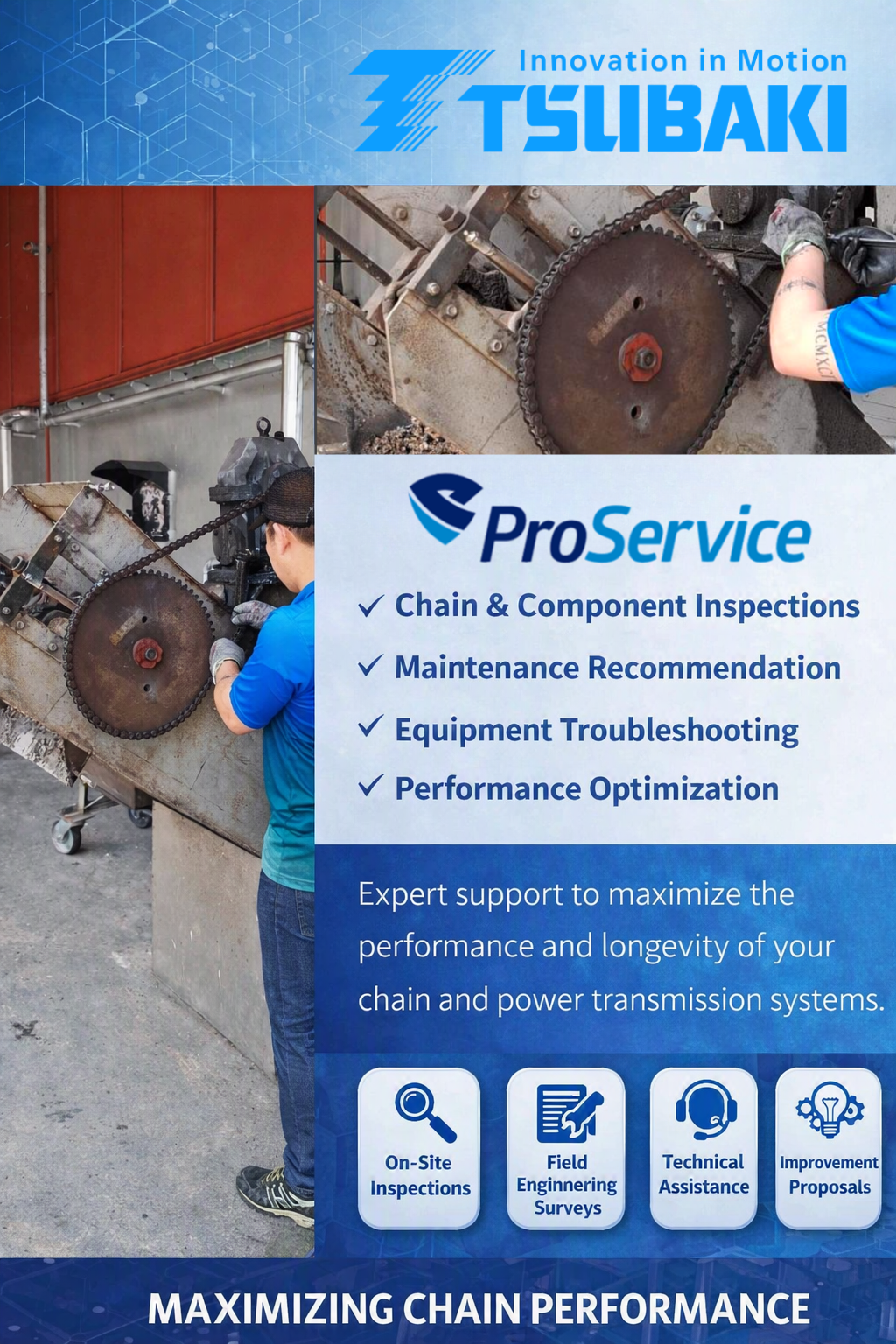
Tsubaki ProService recently conducted a comprehensive inspection at a food manufacturing facility in the Visayas region, focusing on the ash conveyor drive chain system. This equipment plays a crucial role in handling production by‑products, and its performance directly impacts the plant's operational efficiency, safety, and overall productivity. The inspection was scheduled as part of the company's preventive maintenance program, ensuring that critical assets are regularly assessed to avoid unexpected breakdowns and costly downtime. The activity was carried out by Solutions Engineer Sean, who led the on‑site evaluation and provided technical expertise throughout the process.
The scope of the inspection included a detailed visual examination of the ash conveyor drive chain, sprockets, and related components. Sean carefully checked for signs of wear, elongation, corrosion, and misalignment that could compromise performance. In addition, lubrication practices were reviewed to determine whether the current schedule and materials were sufficient for the demanding operating environment. An operational assessment was also carried out while the conveyor was running, allowing the team to observe chain movement, vibration levels, and any abnormal noise that might indicate hidden issues. Finally, a safety and reliability check was performed to confirm compliance with industry standards and to minimize risks associated with continuous operation in a food manufacturing setting.
The inspection revealed several important findings. Minor chain elongation was observed, which requires adjustment to maintain proper tension and prevent premature wear. Evidence of abrasive damage caused by ash particles was noted, highlighting the need for improved cleaning intervals and protective measures to reduce contamination. Lubrication frequency was found to be insufficient, and Sean recommended increasing lubrication cycles while using high‑temperature resistant lubricants specifically designed for ash handling applications. Although no immediate risk of failure was detected, the inspection emphasized the importance of preventive measures to extend the equipment's lifespan and maintain smooth, uninterrupted operation.
Based on these findings, Solutions Engineer Sean provided tailored recommendations to the food manufacturer. These included implementing a stricter cleaning schedule to reduce abrasive wear, adjusting chain tension to correct elongation, and adopting improved lubrication practices. He also advised monitoring chain elongation levels closely and planning for replacement once elongation exceeds recommended limits. Follow‑up inspections were suggested to track improvements and ensure that corrective actions deliver long‑term reliability.
The value delivered through this activity was significant. By identifying potential issues early, the inspection reduced the risk of unexpected downtime and costly repairs. Preventive maintenance recommendations extended the service life of the conveyor system and improved overall plant efficiency. Most importantly, the inspection enhanced workplace safety by ensuring that the ash conveyor operates smoothly without risk of sudden failure.
In conclusion, the inspection of the ash conveyor drive chain at the food manufacturing facility in Visayas demonstrates Tsubaki ProService's commitment to supporting industrial partners with proactive maintenance strategies and technical expertise. With Solutions Engineer Sean leading the activity, the manufacturer benefited from a thorough evaluation and practical recommendations that will help secure reliable operations, minimize risks, and maintain high standards of safety and productivity. This activity underscores the importance of regular inspections and preventive maintenance in sustaining long‑term equipment performance and operational excellence.